
The Longevity Dividend: The Business Case for Linking Health and Wealth


How connecting health and financial resilience can unlock trillions in value for individuals, businesses and economies
A collaboration with the World Economic Forum
Drawing on new data and analysis across 21 countries, the report demonstrates what societies stand to gain when health and wealth are addressed together. The findings show that just three proven interventions could save healthcare systems more than $5.8 trillion and unlock an additional $645 billion in productivity gains globally by 2040. It also explores how issues such as caregiving, ageism and housing affordability create hidden costs across generations, and why a longevity-focused approach can help people thrive at every stage of life.
Too often, longevity is framed as a challenge for ageing populations, healthcare systems or retirement provision – yet the evidence tells a different story. When longevity is treated as an issue of both health and wealth, it can be the most significant economic opportunities of the coming decades, with the potential to improve individual wellbeing while strengthening business resilience and encouraging economic growth.
Our research shows that when leaders act early, breaking down silos between health, finance, and labor, they can unlock economic growth, improve well‑being, and create lasting value for businesses, governments, and society as a whole.
President and CEO of Mercer, a Marsh business
The Longevity Dividend
The report identifies a compelling business case for viewing longevity through the combined lens of health and wealth.
It highlights three practical interventions that could deliver significant economic and societal returns:
Key findings
-
A single year of caregiving combined with the gender pay gap can reduce a woman's retirement pension by an average of 24%.
-
Fall-proofing homes could save global healthcare systems $5.4 trillion by 2040 and add more than 280 million healthy life years.
-
Increasing physical activity could prevent 8.5 million cases of type 2 diabetes and unlock more than $120 billion in productivity gains.
-
Greater access to hearing aids could prevent 2.4 million dementia cases and save more than $320 billion in healthcare costs.
-
Longevity is a global issue. Countries across the demographic spectrum, including those with younger populations today, have significant opportunities to improve health, financial resilience and economic growth through early action.
A new framework for longer lives
The report challenges traditional approaches that separate healthcare, retirement, labor markets and financial planning. Instead, it presents longevity as a shared opportunity that requires collaboration between governments, employers, financial institutions and healthcare systems, as well as offering solutions for these stakeholders to seize the longevity dividend.
By investing in preventative health measures, supporting caregivers, addressing ageism and creating systems that promote lifelong resilience, decision-makers can help people live longer, healthier and more financially secure lives while strengthening economic prosperity.
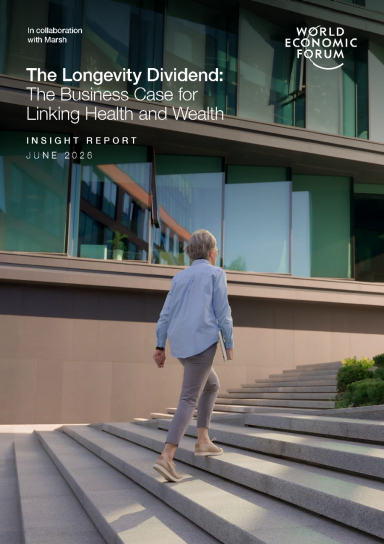
The Longevity Dividend
Global Defined Benefit Segment Leader
Centre Curator, Financial and Monetary Systems, World Economic Forum